

Why are these adjectives important for B2 learners?
At B2 level, you need to express yourself with more detail and emotion. Simple adjectives like good أو bad are not enough.
These adjectives help you describe your experiences, opinions, and feelings more precisely, especially when talking about films, books, events, or places.
✍️ لست متأكدًا من مستواك؟
خُذ اختبار تحديد المستوى المجاني الخاص بنا واحصل على تعليقات مخصصة من ممتحنين معتمدين من كامبريدج.
قم بإجراء اختبار تحديد المستوى المجانيAdjectives for Positive Experiences
When something is very good or captures your attention, you can use these adjectives:
- Amazing: This means extremely surprising or impressive. It's stronger than very good.
- Awesome: Similar to amazing, it means extremely impressive or excellent. It often suggests a feeling of wonder.
- Interesting: This describes something that holds your attention and makes you want to know more. It's not as strong as amazing, but it's definitely positive.
Adjectives for Negative Experiences
When something is very bad or unpleasant, these adjectives are useful:
- Boring: This describes something that is not interesting and makes you feel tired or impatient.
- Horrible: This means extremely unpleasant, dreadful, or shocking. It describes something that causes a strong negative feeling.
- Terrible: Similar to horrible, it means extremely bad or severe. It's a strong way to say something was very poor in quality or experience.
How to use these adjectives in reviews?
These adjectives are perfect for giving your opinion in reviews for films, books, concerts, or restaurants. They make your writing more vivid and persuasive.
- Use them to describe the overall experience: The film was amazing!
- Describe specific aspects: The acting was terrible. أو The plot was interesting.
- Combine them with adverbs for emphasis: It was absolutely horrible.
| Positive Adjectives (Stronger than 'Good') | Negative Adjectives (Stronger than 'Bad') |
|---|---|
| amazing | boring |
| awesome | horrible |
| interesting | terrible |
أمثلة
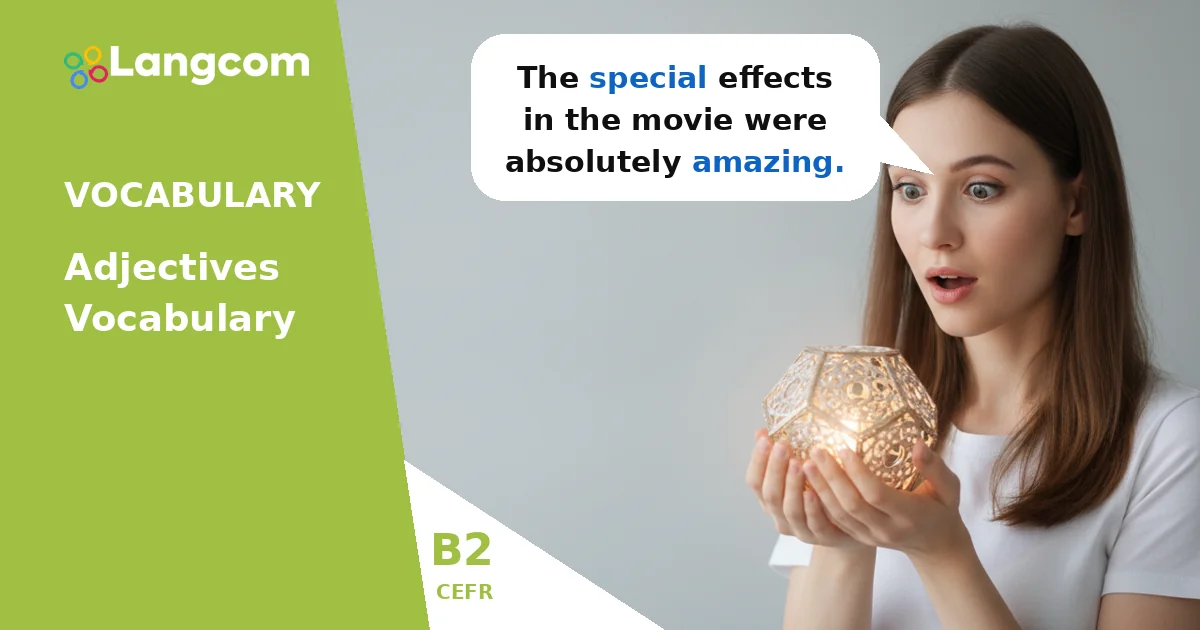
- The special effects in the movie were absolutely amazing.
- Winning Voices was great fun last night. The Pictures won first prize. I'm glad because they were awesome!
- I found the documentary quite interesting, especially the part about ancient history.
- The lecture was so boring that I almost fell asleep.
- The food at that restaurant was horrible; I couldn't even finish my meal.
- The acting was bad. The costumes were bad. Everything was bad! Don't go. It's terrible!
التدريب
هل أنت مستعد للحصول على شهادتك؟
يُعد برنامج Langcom الطلاب لامتحانات كامبريدج وIELTS وTOEFL وDELE وSIELE وMichigan.
ابدأ مع Langcomالأخطاء الشائعة لدى المتحدثين باللغة الإسبانية
Boring vs. Bored
Many Spanish speakers confuse adjectives ending in -ing و -ed. Remember:
- Boring describes the thing or situation that *causes* the feeling. The film was boring. (The film caused boredom.)
- Bored describes the *feeling* someone has. I was bored during the film. (I felt boredom.)
Using 'Very' with Strong Adjectives
Avoid using very with strong adjectives like amazing أو terrible. These adjectives already express a strong degree. Instead, use adverbs like absolutely, really, ، أو extremely.
- Incorrect: The concert was very amazing.
- Correct: The concert was absolutely amazing.
- Incorrect: The weather was very horrible.
- Correct: The weather was really horrible.
الأسئلة الشائعة
What is the difference between 'amazing' and 'awesome'?
Both amazing و awesome mean extremely impressive or excellent. Awesome can sometimes imply a greater sense of wonder or respect, but they are often interchangeable for general positive descriptions.
Can I use 'interesting' for people?
Yes, you can describe a person as interesting if they have a captivating personality, unique ideas, or a fascinating life story. For example, She's a very interesting person to talk to.
How can these adjectives help me in the B2 First exam?
These adjectives are crucial for the B2 First (FCE) exam, especially in the Writing and Speaking papers. Using a range of strong adjectives helps you express opinions clearly and precisely, which is important for tasks like writing reviews or essays, and for demonstrating a wider vocabulary in conversations.
Are 'horrible' and 'terrible' exactly the same?
They are very similar and often used interchangeably to mean extremely bad or unpleasant. Horrible can sometimes suggest something that causes fear or disgust, while terrible can also mean severe (e.g., a terrible headache). However, in general reviews, their meanings overlap greatly.



0 تعليق